


Whether it's building a new fresh food distribution center, expanding a food processing plant, or upgrading a pharmaceutical warehouse, choosing the right type of cold storage is the cornerstone of project success. In recent years, modular assembly cold storage has attracted attention due to its fast and flexible characteristics, while traditional customized cold storage is still the first choice for many complex scenarios. Which one is more suitable for you? We will provide you with a detailed breakdown in the following text.
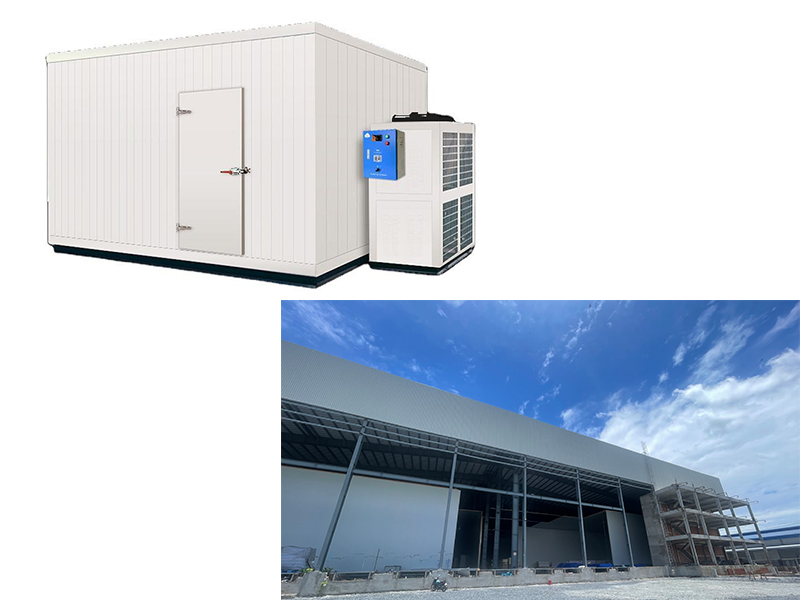
Modular cold storage: quickly assembled like building blocks, flexible, movable and expandable, fast to start, suitable for developing and changing businesses.
Applicable scenarios: Large logistics centers, multifunctional processing plants, renovation of old warehouses, pharmaceutical or laboratory cold storage facilities with special process requirements.
Applicable scenarios: Storage expansion in standard factory buildings, temporary or seasonal storage needs, e-commerce distribution centers, and fast food chain central kitchens.
Construction: There are many on-site operations, which may cause certain interference to existing business.
Construction: Dry operation is the main method, with low noise and pollution, and low impact on the operating environment.
Long term value: Due to its high adaptability, it often has better operational efficiency and energy consumption control, and may have lower lifecycle costs.
Expansion cost: In the future, if expansion is needed, it can be easily achieved by adding modules, and the cost is controllable.
Can integrate more complex intelligent control systems and high-end equipment (such as parallel screw units).
The energy efficiency depends on the configuration of the selected standard unit, and the performance is completely reliable for conventional temperature zone requirements.
Modular assembly cold storage: one of the core advantages. Most components can be disassembled and reorganized in a new location, greatly improving asset liquidity. Expansion only requires adding modules, seamlessly connecting.
To be "fast, cost-effective, and flexible", choose modularity.
Do you want to receive specific plans and quotations? Please provide basic project information, and we will prepare a detailed comparative proposal for you.
Core concept analysis
Customized cold storage: built for a fixed site for a long time, with a high performance limit, but slow construction, difficult modification, and large initial investment.Modular cold storage: quickly assembled like building blocks, flexible, movable and expandable, fast to start, suitable for developing and changing businesses.
Comprehensive comparison: Five key dimensions
1. Design flexibility and adaptability
Customized cold storage:
Advantages: The design is completely tailored to the site conditions (such as irregular terrain, existing building structures), special process flows (such as multi temperature zone linkage, cleanliness requirements), and future expansion plans, achieving a "tailor-made" approach.Applicable scenarios: Large logistics centers, multifunctional processing plants, renovation of old warehouses, pharmaceutical or laboratory cold storage facilities with special process requirements.
Modular assembly cold storage:
Advantages: Using standardized prefabricated warehouse panels (such as our company's double locking high-strength panels) and components, they can be quickly assembled in a regular site. The flexibility of design is reflected in the internal layout, but overall it is limited by the standardized size of modules.Applicable scenarios: Storage expansion in standard factory buildings, temporary or seasonal storage needs, e-commerce distribution centers, and fast food chain central kitchens.
2. Project timeline and construction impact
Customized cold storage:
Cycle: Longer. It needs to go through multiple stages such as detailed design, civil construction, equipment customization, on-site installation and commissioning, usually taking 2-6 months or even longer.Construction: There are many on-site operations, which may cause certain interference to existing business.
Modular assembly cold storage:
Cycle: significantly shortened. The warehouse boards, units, etc. are prefabricated in the factory and assembled on site like building blocks. A medium-sized cold storage can be completed within 2-4 weeks from entry to cooling down.Construction: Dry operation is the main method, with low noise and pollution, and low impact on the operating environment.
3. Investment cost analysis
Customized cold storage:
Initial cost: usually higher. Involving customized design fees, special materials, non-standard components, and longer construction labor costs.Long term value: Due to its high adaptability, it often has better operational efficiency and energy consumption control, and may have lower lifecycle costs.
Modular assembly cold storage:
Initial cost: More predictable and competitive. Standardized production reduces unit prices, shortens construction periods, and saves labor costs.Expansion cost: In the future, if expansion is needed, it can be easily achieved by adding modules, and the cost is controllable.
4. Performance and Energy Efficiency
Customized cold storage:
The insulation system and refrigeration pipeline can be accurately calculated and arranged according to the heat load to achieve the best energy efficiency ratio.Can integrate more complex intelligent control systems and high-end equipment (such as parallel screw units).
Modular assembly cold storage:
The insulation performance of standard library boards (such as the PIR polyurethane board we use, with a thermal conductivity of ≤ 0.022W/m · K) is fully guaranteed.The energy efficiency depends on the configuration of the selected standard unit, and the performance is completely reliable for conventional temperature zone requirements.
5. Relocatability and Scalability
Customized cold storage: basically fixed facilities, difficult to relocate, expansion requires secondary construction.Modular assembly cold storage: one of the core advantages. Most components can be disassembled and reorganized in a new location, greatly improving asset liquidity. Expansion only requires adding modules, seamlessly connecting.
One sentence suggestion
To achieve "perfect fit" and "ultimate performance", choose customization.To be "fast, cost-effective, and flexible", choose modularity.
Next steps:
Not sure which one is more suitable? Click here now to schedule a free 15 minute online diagnosis, and our experts will provide directional advice based on your preliminary information.Do you want to receive specific plans and quotations? Please provide basic project information, and we will prepare a detailed comparative proposal for you.