


Installing industrial low-temperature cold storage (-18°C to -40°C) requires careful planning to ensure stable temperature control, energy efficiency, and long-term reliability—key goals for any industrial low-temperature cold storage installation. Whether for food preservation, pharmaceutical storage, or logistics, following these critical installation considerations is essential for a high-performance cold room. Below are the most important factors to focus on for industrial low-temperature cold storage installation.
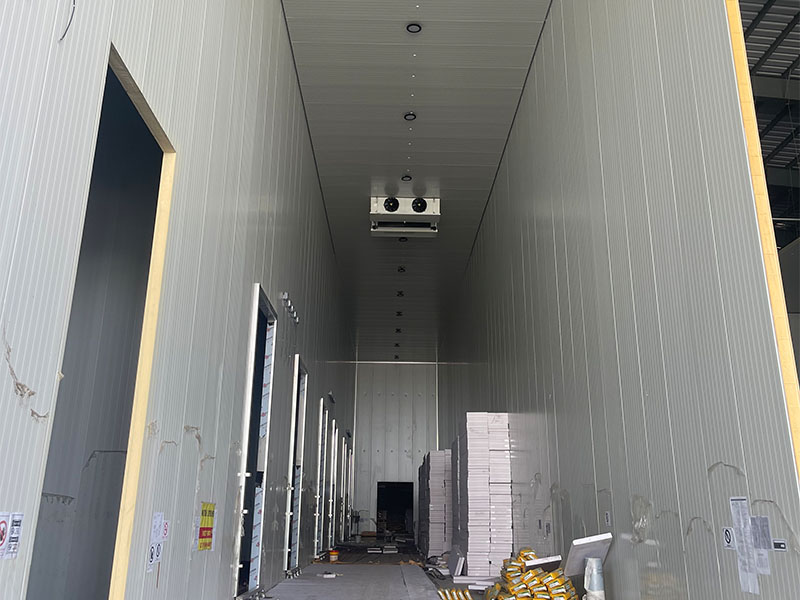
Strictly following these rules will ensure stable operation, low energy consumption, and long service life for your cold storage.
1. Site & Foundation Preparation
Low-temperature cold rooms impose strict requirements on the installation base. Poor preparation leads to structural deformation, air leakage, and high energy costs.- The ground must be level, load-bearing, and moisture-proof. For temperatures ≤-25°C, add an insulation layer and anti-frost heave structure to avoid ground cracking.
- Keep the area dry, ventilated, and free of corrosive gas, flammables, and explosives.
- Reserve sufficient space for equipment maintenance:
- Condenser: ≥400mm from the wall at the air inlet; ≥3m clearance at the air outlet.
- Evaporator: Maintain proper distance from walls and stored goods for uniform airflow.
- Confirm power supply in advance: large cold storage needs 380V three-phase power with stable voltage (fluctuation ≤±10%).
2. Cold Room Panel & Sealing Installation
Sealing and insulation directly determine energy efficiency and temperature stability; gaps are the biggest cause of energy waste.- Use high-density PU sandwich panels with thermal conductivity ≤0.022 W/(m·K). Thickness: 100–150mm for -18°C; 150–200mm for ≤-25°C.
- Install panels from a fixed corner; ensure verticality and levelness.
- All joints must use special low-temperature sealant; no gaps allowed.
- Use corner profiles at wall–roof and wall–floor junctions to strengthen sealing and avoid cold bridges.
- Penetrations for pipes and wires must be sealed tightly with insulation and foam to prevent air leakage.
3. Cold Storage Door Installation
Door issues are the most common after-sales problem in low-temperature cold rooms.- Use a special low-temperature cold room door with a built-in electric heating wire to prevent freezing and sticking.
- Install door frame firmly and level; test sealing with paper strips (no air leakage).
- Equip with safety escape device for emergency exit from inside.
- Install an air curtain or door closer to reduce cold air loss when opening frequently.
4. Refrigeration System Installation
The refrigeration unit is the heart of low-temperature cold storage.- Select a low-temperature compressor unit matched to storage volume and target temperature.
- Install oil separator and gas–liquid separator for evaporation temperature below -15°C.
- Use nitrogen protection during copper pipe welding to prevent oxidation and blockage.
- All external pipes must be insulated and protected to avoid condensation and cold loss.
- Keep the pipeline as short and straight as possible; increase pipe diameter if the unit is >3m from the evaporator.
5. Evaporator, Defrost & Drainage
Low-temperature rooms produce heavy frost; poor drainage causes ice blockage.- Install the evaporator centrally for even air distribution; no dead corners.
- Use automatic defrosting (electric or hot gas).
- Drainage pipes must have a slope toward the outside and be equipped with heating cable + insulation to prevent freezing.
- Install a U-shaped water seal at the outlet to prevent hot air and insects from entering.
6. Electrical & Control System
- Use explosion-proof, moisture-proof, low-temperature resistant lamps and sockets.
- Install temperature sensors at the return air inlet (not close to heat sources or defrosting pipes).
- Equip with temperature monitoring, alarm, and remote control functions.
- Ensure reliable grounding and leakage protection.
7. Safety & Compliance
- Comply with local building, fire safety, and food storage regulations.
- Install emergency lighting, exit signs, and fire alarms.
- Provide operation and maintenance training for on-site staff.
8. Commissioning & Acceptance
- Conduct a 72-hour continuous full-load test.
- Verify temperature uniformity, unit stability, defrost function, and drainage.
- Check for abnormal noise, vibration, frost, or leakage.
- Provide complete documents: drawings, parameters, operation manual, and warranty.
Conclusion
Industrial low-temperature cold storage installation is a systematic project. The key points are:solid foundation → tight sealing → matched refrigeration → reliable defrost and drainage → safe electrical → professional commissioningStrictly following these rules will ensure stable operation, low energy consumption, and long service life for your cold storage.